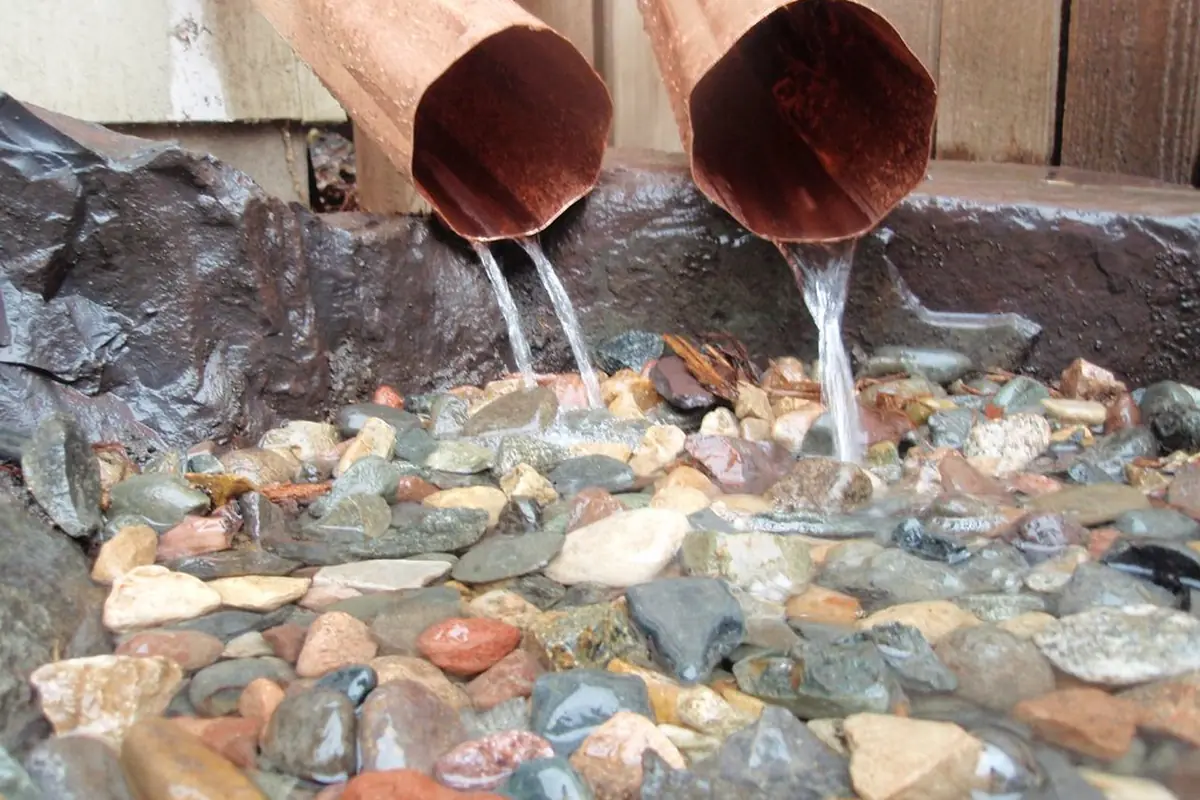
Downspout and yard drainage work moves rain and snowmelt away from your foundation before it can soak into the soil next to the basement wall. In Rochester, NY, that usually means longer or buried downspout lines, regrading soil so it slopes away from the house, and sometimes a swale, dry well or rain garden to take the water somewhere useful. It is often the first and least expensive step a waterproofing contractor will suggest.
How much water a roof sheds
A single inch of rain on a 1,500-square-foot roof produces more than 900 gallons of water. Every gallon goes down a handful of downspouts. If each one empties a foot from the wall, you are pouring that water into the backfill around your basement, which is the loosest, most permeable soil on the lot. Add a spring melt after a winter like the ones the National Weather Service in Buffalo tracks off Lake Ontario, and the load is much larger.
Downspout fixes
- Extensions. Simple and cheap. Rigid or flexible extensions move water four to ten feet out. They get knocked loose by mowers and snow blowers, so they need checking.
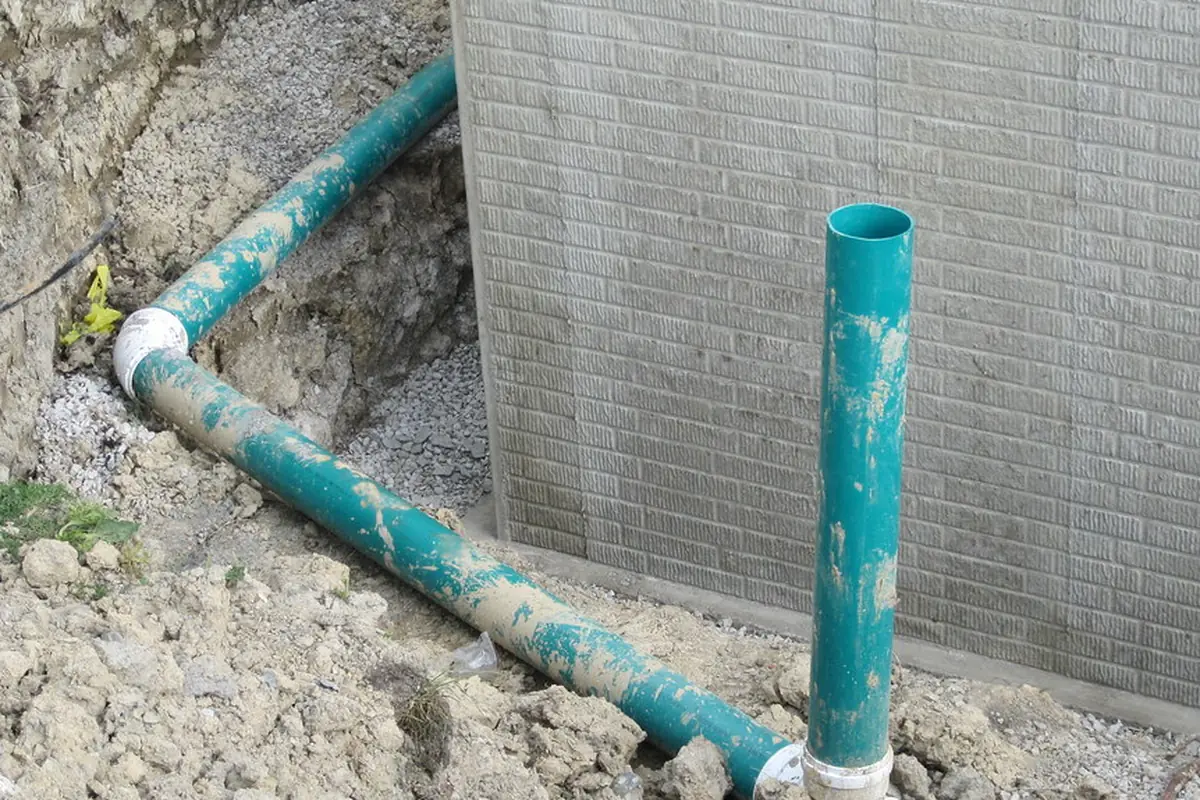
- Buried lines. Solid pipe from each downspout to a pop-up emitter, a dry well or a curb outlet where permitted. Add cleanouts to clear leaves.
- Splash blocks and rock beds. Fine where the ground already slopes away; useless where it does not.
- Gutter fixes. Clogged or undersized gutters overflow along the eaves and drop water right at the foundation. Ice buildup in winter does the same; see our post on icicles and basement leaks.
Regrading the yard
Soil around older homes settles for decades. Flower beds get built up with mulch, walkways sink, and patios tilt toward the house. Regrading means bringing in fill, compacting it and shaping it to slope away, then reseeding or replanting. It sounds simple and often is, but window wells, siding clearance and neighboring lots limit how high soil can go. A contractor can tell you whether there is room.
Swales, dry wells and rain gardens
When water has nowhere to go, give it a path. A shallow, grassed swale carries surface water around the house to a lower part of the lot. A dry well is a buried pit filled with stone that lets water soak in slowly; it works best in sandy soils. A rain garden is a shallow, planted basin that holds roof water and lets it infiltrate. The EPA's Soak Up the Rain program explains how rain gardens and similar features reduce runoff. Our post on rain gardens for roof runoff covers how they fit Rochester yards.
City lots and tight spaces
Many homes in Rochester's older neighborhoods, from the 19th Ward to the streets around Highland Park, sit on narrow lots with driveways on one side and a neighbor's house a few feet away on the other. That makes routing water harder. Common answers are buried lines that run to the front yard, surface channels along the driveway edge, and careful grading that keeps water off both houses. See downspouts on narrow city lots.
When yard drainage is not enough
If downspouts and grading are fixed and the basement still leaks during long rains or snowmelt, the issue is likely groundwater, not surface water. That calls for exterior drain tile, interior drainage, or sump pump work. Fixing the yard first still helps: every gallon kept away from the wall is a gallon the pump does not have to move.
Yard drainage around the suburbs
Flat lots in Henrietta and Spencerport often have little natural slope, so grading and buried lines matter more there. Lots in hillier parts of Penfield and Brighton can have the opposite problem, with uphill water running toward the house. Each town page covers local conditions.
Yard drainage questions
How far should downspouts discharge from the house?
Many building guides recommend at least four to six feet, and farther is better on flat lots or heavy clay. The real test is where the water goes after it leaves the pipe. If it runs back toward the house or pools near the foundation, the extension needs to be longer, buried, or paired with regrading.
Are buried downspout lines a good idea?
They work well when the pipe is solid, sloped, and ends at a free outlet, such as a pop-up emitter downhill or a dry well in sandy soil. They fail when they are crushed, clogged with leaves, or freeze. A cleanout near each downspout makes maintenance much easier.
What grade should soil have near the foundation?
The common rule is a drop of about six inches over the first ten feet away from the wall. Over time, soil settles, mulch builds up and patios sink, so many Rochester yards slowly lose their slope. Regrading with clean fill, then reseeding, is one of the most effective low-cost fixes.
Can I send downspout water to the street or the sewer?
Rules vary by municipality. Roof water should never go into the sanitary sewer, and many towns restrict connections to the storm system. Ask your town's public works department before connecting anything underground, and avoid sending water onto a neighbor's property.