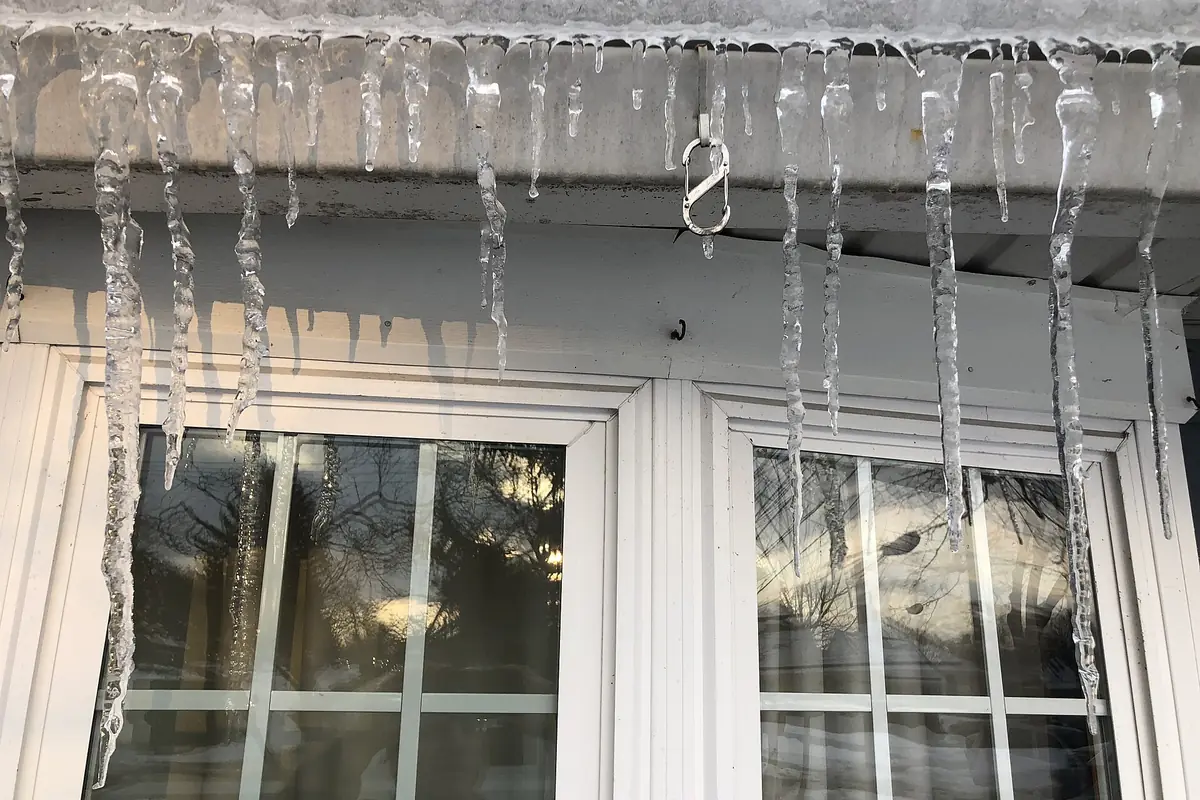
Icicles and ice dams can cause basement leaks because they block gutters and downspouts in winter, so meltwater spills over the gutter edge and lands directly on the soil next to the foundation. When a thaw arrives, that strip of soil, often still frozen below the surface, cannot absorb the water, which then runs down along the wall and into the basement.
How the water gets from the roof to the basement
Heat escaping through the attic melts snow on the roof. The meltwater runs down to the cold eaves, refreezes, and builds a ridge of ice at the gutter. Gutters fill with ice, downspouts freeze solid, and icicles hang from the edge. On the next warm day, everything melts at once. With the downspouts blocked, water pours off the eaves in a sheet and soaks the backfill along the wall, the loosest soil around your house.
Why Rochester gets so much of it
Rochester sees a lot of freeze-thaw swings. Lake-effect snow bands off Lake Ontario can drop heavy snow in a day, and the National Weather Service in Buffalo often follows them with forecasts of thaws and rain. Older homes with less attic insulation, common in neighborhoods like the 19th Ward and the streets near the Genesee River, tend to grow the biggest icicles.
Signs the leak is ice-related
- Water appears during or just after a thaw, not during ordinary rain.
- It shows up on the same side of the house as the worst icicles.
- Downspouts on that side were frozen or buried in snow.
- The leak stops once the gutters clear.
What to do this winter
- Clear the downspout outlets. Make sure snow and ice are not blocking the bottom of each downspout and that extensions are still attached.
- Move snow piles. Shovel snow a few feet away from the foundation, especially on the side where meltwater collects.
- Check the sump. Make sure the pump runs and the discharge line is not frozen. See our pre-thaw sump check.
- Watch where the water goes. Note which wall gets wet and when. That helps a contractor later.
Fixes for the long term
Better downspout routing. Extensions or buried lines that carry water well away from the house. See downspouts and yard drainage.
Grading. Soil that slopes away from the wall moves meltwater away instead of toward the basement.
Attic insulation and ventilation. Reducing heat loss into the attic reduces ice dams. That is a job for an insulation or roofing contractor.
Drainage at the foundation. If the wall still leaks after the roof water is under control, the footing drain may be the problem. See exterior drain tile and our post on signs of a clogged footing drain.
The bottom line
Winter leaks that track the icicles are usually about where the roof water lands. Fix the gutters and downspouts first, then watch the next thaw. If water still comes in, it is time to look below grade.
Common questions
Should I knock icicles off my gutters?
Small icicles can be knocked down safely from the ground with a long pole, standing well clear. Do not climb a ladder onto icy surfaces or chip at gutters with metal tools. Large ice buildup is a sign the gutters or attic need attention once the weather allows.
Will heat cables in gutters stop basement leaks?
Heat cables can keep a channel open so meltwater reaches the downspout, which helps if the downspout then carries the water well away from the house. If the downspout still dumps against the foundation, the cables just deliver the water faster.