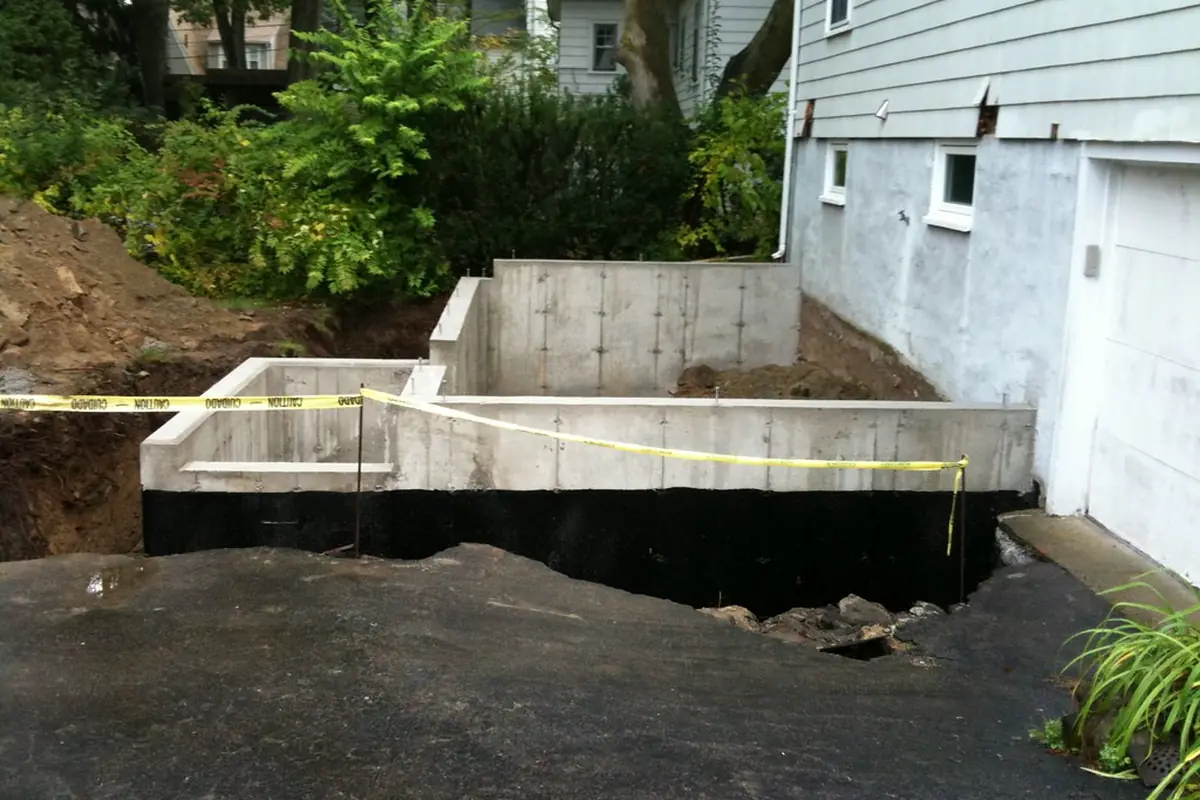
The short answer: a good waterproofing contractor in Rochester, NY stops water at its source, whether that source is a crushed footing drain, a tired sump pump, a cracked or porous wall, or a downspout emptying against the foundation. Waterproofing Contractor Rochester NY is a phone line for homeowners across Rochester and nearby Monroe County towns. You call, explain what is happening, and you are connected with an independent local waterproofing contractor who handles that kind of job.
The six waterproofing services on our line
Each of these six jobs has its own page with the details.
- 01Exterior drain tileNew footing drains and weeping tile when the old perimeter drain has clogged or collapsed.
- 02Sump pumpsNew pits, pump replacements, check valves, freeze-resistant discharge lines and backup pumps.
- 03Wet or leaking basementsTracing seepage, cove joint leaks, wall cracks and damp floors, then matching the right fix.
- 04Wall waterproofingExterior membranes, interior wall drainage and crack sealing for block, poured and stone walls.
- 05Downspouts and yard drainageExtensions, buried downspout lines, regrading and swales that keep roof water off the foundation.
- 06Emergency jobsUrgent basement water from a failed pump, a storm or a fast thaw, with safety steps first.
If you are not sure which one you need, that is normal. Start with wet or leaking basements, which explains how a contractor traces a leak before recommending a fix.
Why Rochester basements take on water
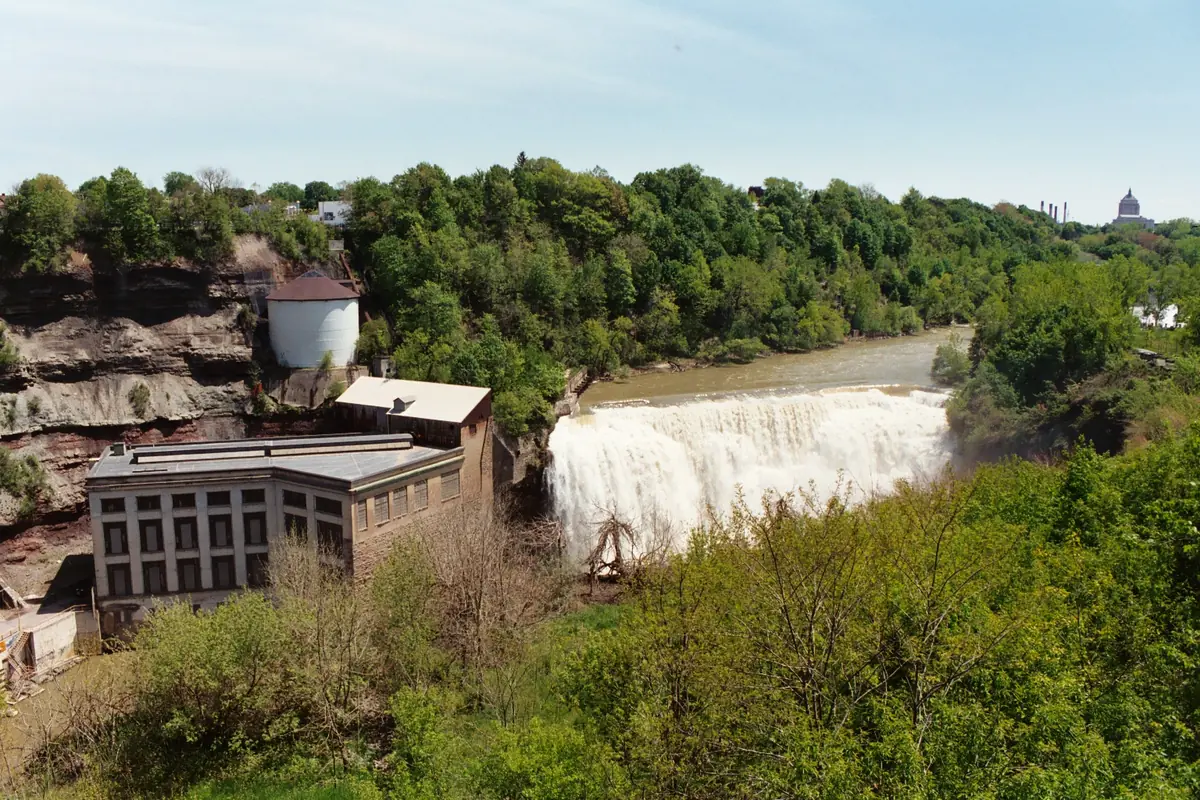
The Genesee River splits the city on its way to Lake Ontario, a few miles north, and the former canal route still curves through the south and west sides. Plenty of neighborhoods sit on dense, slow-draining soil with a water table that climbs every spring. You can see the geology downtown at High Falls, where the river drops over layered rock; similar layers under nearby houses steer groundwater sideways into basement walls.
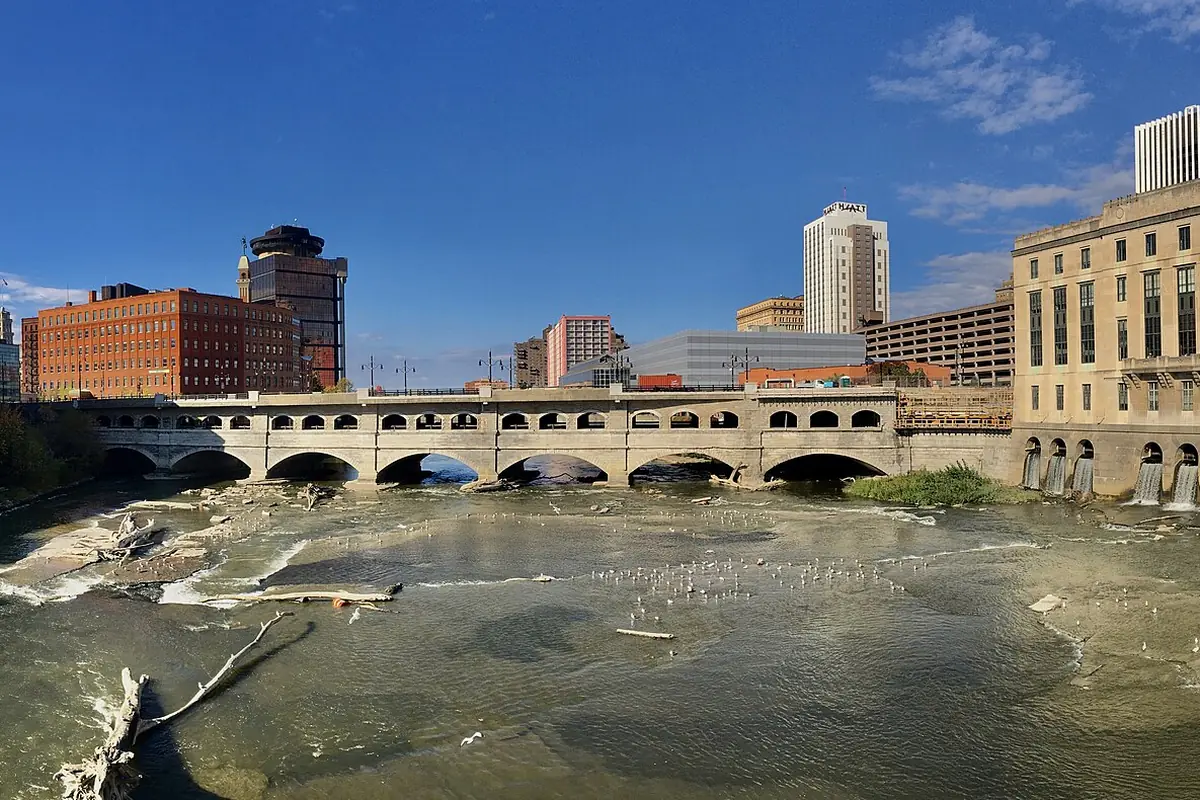
Then there is the snow. Lake-effect bands tracked by the National Weather Service in Buffalo can park over the city for days, and a typical winter here totals roughly a hundred inches. When that pile melts on top of soil still frozen just below the surface, the water slides sideways into the loose backfill hugging your foundation.
Older homes, older foundations
Census survey data shows a majority of the city's homes date from before 1940. Stroll the Park Avenue area, the South Wedge or the blocks near Highland Park, where the Lilac Festival is held, and you see stone, brick and early block foundations never meant to stay dry, many with clay drains long since clogged.
So the fix depends on the wall. Stone and brick usually call for interior drainage, not sealer paint. Block holds water in its hollow cores. Poured concrete tends to leak at cracks and at the floor joint.
Common causes we hear about on calls
- Failed footing drains. Old clay or early plastic drain tile clogs with silt and roots. The fix is often exterior drain tile replacement, especially when the wall itself is sound.
- Sump pump trouble. A pump that is undersized, worn out, or discharging into a frozen line can turn a dry basement wet in one storm. See sump pumps.
- Porous or cracked walls. Damp patches, white mineral deposits and seepage stains point toward wall waterproofing.
- Roof water dumped at the foundation. Short downspouts and grading that slopes the wrong way are the cheapest problems to fix. Start with downspouts and yard drainage.
- Sudden flooding. A pump failure during a thunderstorm or a fast thaw needs a fast response. Our emergency basement water page explains what to do first and how to reach help.
Where we take calls
The line covers the City of Rochester, from Charlotte near the lake down through Maplewood and the neighborhoods around Seneca Park on the river's east bank, plus suburbs around the city. Lakeshore towns such as Greece, Irondequoit and Webster deal with high water and wind-driven snow. Canal towns such as Pittsford, Fairport and Spencerport have older village homes close to the Erie Canal. Each town page covers local conditions.
- GreeceLakeshore homes near Braddock Bay and Ridge Road subdivisions.
- IrondequoitHomes near Durand Eastman Park, the bay and Lakeshore Boulevard.
- WebsterLake Road homes near Webster Park and older houses in the village.
- PenfieldHomes near Ellison Park, Irondequoit Creek and Penfield Road.
- PittsfordCanal-side village homes and newer neighborhoods near Powder Mills Park.
- BrightonOlder homes near Twelve Corners and lots along Allens Creek.
- HenriettaFlat subdivisions near Tinker Nature Park, RIT and the Genesee.
- Fairport and PerintonVillage homes near the lift bridge and Perinton neighborhoods.
- Spencerport and OgdenCanal village homes near the Union Street lift bridge and Ogden lots.
What happens when you call
- You describe the problem. Where water shows up, how much, how often, and whether it follows rain, snowmelt or nothing obvious.
- You are connected with a local contractor. The contractor confirms it serves your ZIP code and that the job is one it does.
- A site visit and a written quote. Expect someone to look at the walls, floor, sump, gutters and grading before naming a price. Jobs above $500 need a signed contract under state law.
- You decide. No pressure and no obligation. Compare quotes if you like.
Choosing a waterproofer in Monroe County
Ask how the contractor will find the water's entry point, what the warranty covers in writing, whether a permit is needed, and who handles it. Before any excavation, the contractor should call 811 through Dig Safely New York so gas and power lines are marked. For a deeper list of questions, read our waterproofing guides on the blog or the FAQ.
Rochester basement questions we hear most
What does a waterproofing contractor in Rochester, NY actually do?
A waterproofing contractor finds where water is getting into a basement and stops it. In Rochester that usually means replacing failed footing drains, adding or upgrading a sump pump, sealing foundation walls, fixing grading and downspouts, or responding when water is already on the floor. Good contractors diagnose before they sell a system.
Is interior or exterior waterproofing better for a Rochester home?
Neither wins every time. Exterior work, digging down to the footing and adding membrane and new drain tile, stops water at the wall but costs more and disturbs landscaping. Interior drainage collects water that already got through and sends it to a sump. The right answer depends on your wall type, lot and budget.
Why does my basement only leak in spring?
Spring is when Rochester's winter snowpack melts while the ground below is still partly frozen. Meltwater cannot soak in, so it runs along the surface toward your foundation and saturates the backfill. If footing drains are clogged or downspouts dump next to the wall, that is usually when seepage shows up.
Do I need a permit for basement waterproofing in Rochester?
It depends on the job and where you live. Inside the City of Rochester, structural repairs and some plumbing and drainage work need a building permit, and suburban towns have their own building departments. Ask your contractor which permits apply and who pulls them before you sign a contract.
How fast can someone come out?
That depends on the contractor you reach, the season and how serious the water is. When you call, describe what you see and give your town and ZIP code. The contractor will confirm whether it covers your address and when it can realistically visit. We do not promise arrival times we cannot control.