Exterior drain tile is the perforated pipe that runs along the outside of your footing, collecting groundwater before it can build pressure against the basement wall and carrying it to a sump or a downhill outlet. When it fails, water that should have drained away pushes through cracks, block cores and the joint where the floor meets the wall. Replacing it is one of the most effective permanent fixes for a leaking basement in Rochester, NY, and one of the most disruptive.
How to tell the footing drain has failed
The signs are often indirect. Water appears low on the wall or along the floor edge, usually after a long rain or during the spring melt. A sump pump that used to cycle after storms goes quiet, even though the basement is wetter than ever. Outside, soil near the foundation stays soggy days after rain. Our guide on signs of a clogged footing drain walks through the clues in more detail.
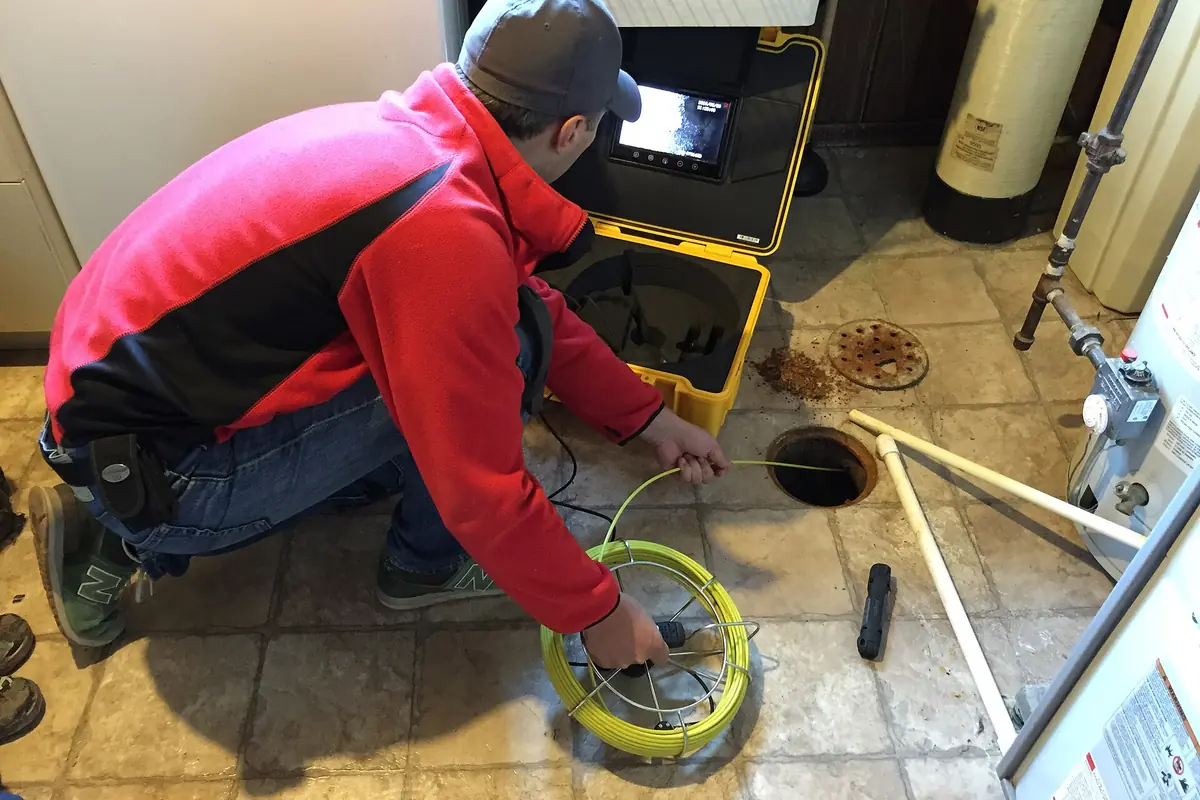
The surest test is a camera. A contractor feeds a small inspection camera into the line from a cleanout, a sump inlet or a test hole, and you see exactly where the pipe is crushed, silted or invaded by roots. Ask to watch the footage. It turns a guess into a diagnosis.
Why so many Rochester drains are worn out
Many houses in Rochester's older neighborhoods, such as the blocks near the Broad Street Bridge and the old Erie Canal aqueduct downtown, or the streets around Cobbs Hill, were built with short sections of clay tile laid end to end with gaps between them. That design let water in, and over the decades it let silt in too. Tree roots found the joints. Heavy freeze-thaw cycles shifted sections out of line.
Mid-century homes are not immune. Some early plastic pipe was laid without washed stone or fabric, and it silted shut. Lots near the Genesee River and its tributaries can have fine soils that clog a drain faster than sandy ground would.
What a full replacement involves
- Locate utilities. Before any digging, the contractor calls 811 through Dig Safely New York so gas, power and water lines are marked.
- Excavate to the footing. A trench is dug along the wall, by machine where there is room and by hand near steps, porches and tight lot lines.
- Clean and inspect the wall. With the wall exposed, cracks and failed parging become visible and can be repaired from the outside.
- Waterproof the wall. Most contractors apply a membrane or coating and often a dimpled drainage board while the wall is open. See wall waterproofing for the options.
- Set new pipe in stone. Perforated pipe is laid at the footing with a steady slope, bedded and covered in washed stone and wrapped in filter fabric.
- Connect the outlet. The new line runs to a sump pit or a daylight outlet. If it goes to a sump, the pump and discharge line should be sized for the new flow; our sump pumps page covers that.
- Backfill and grade. Clean backfill goes back in layers, and the final grade should slope away from the house.
Partial versus full perimeter
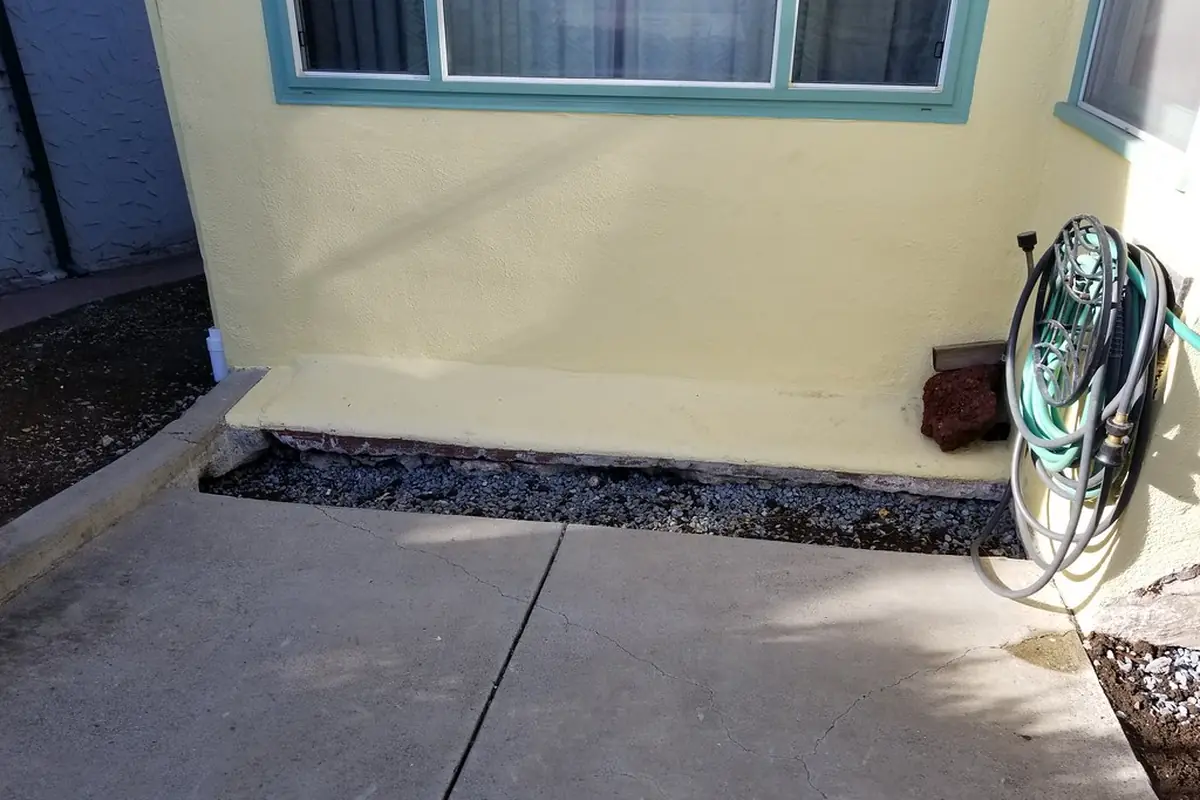
Not every house needs the whole perimeter dug. If a camera shows one wall's drain failed and the rest is sound, a contractor may replace just that run. If the house is old and the tile is clay everywhere, patching one side often moves the problem to the next wall. Ask for the reasoning in writing.
Interior drain tile as an alternative
When excavation is impractical, for example a driveway, a deck or a neighbor's house is a few feet away, an interior perimeter drain installed under the edge of the basement floor is the usual alternative. It relieves water pressure from inside and sends it to a sump. It does not keep the wall itself dry, but it keeps water off the floor. Our wet or leaking basements page compares the two approaches.
Drain tile work around the suburbs
Exterior drain replacement comes up often in Brighton, where many homes date from the 1920s through the 1950s, and in Irondequoit, where lots near Irondequoit Bay can hold water. Newer subdivisions in Henrietta and Webster are more likely to need a cleaning or a single damaged run.
Before you sign
Ask what pipe and stone will be used, where the water will discharge, how the trench will be backfilled, what happens to landscaping and walkways, and what the written warranty covers. In the City of Rochester, check with the building permits office about whether your project needs a permit; in the suburbs, ask your town's building department.
Exterior drain tile questions
How long does exterior drain tile last?
Modern perforated PVC or corrugated pipe set in washed stone and wrapped in filter fabric can work for decades. The clay tile under many pre-war Rochester homes was laid with open joints and no fabric, so silt and roots have had nearly a century to block it. Lifespan depends far more on the filter layer than on the pipe.
Can drain tile be cleaned instead of replaced?
Sometimes. If a camera shows the line is intact but silted, hydro-jetting from a cleanout or the sump can restore flow. If sections are crushed, offset or full of roots, cleaning only buys time. A contractor should show you the camera footage before recommending either option.
Where does the water from new drain tile go?
It goes either to a sump pit inside the basement, which pumps it out to the yard or a storm connection, or downhill by gravity to a daylight outlet if the lot slopes enough. County rules bar foundation drain water from the sanitary sewer unless it is specifically approved.
Will digging ruin my landscaping?
Excavation does disturb whatever sits against the foundation, including shrubs, walkways, patios and sometimes steps. Ask the contractor what will be removed, what will be put back, and whether restoring lawn and plantings is in the price. Many homeowners treat it as a chance to fix grading at the same time.