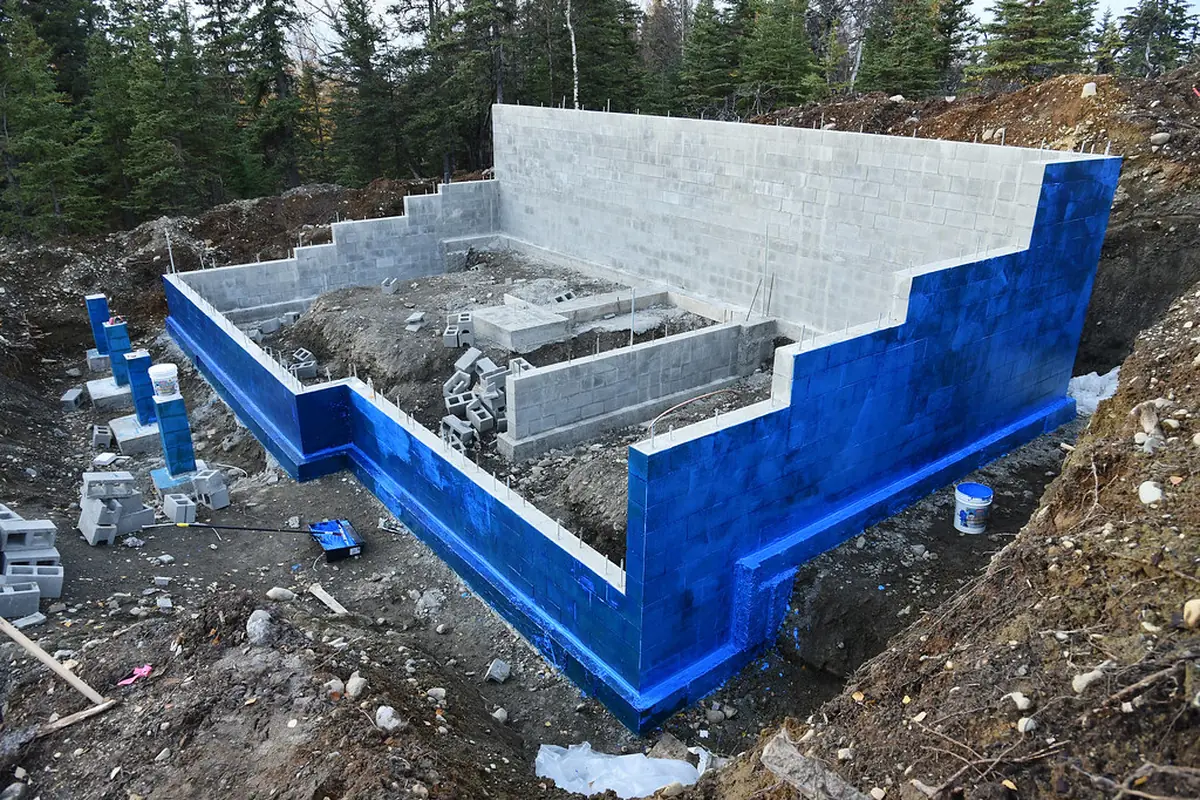
Basement wall waterproofing keeps groundwater from soaking through a foundation wall, either by sealing the outside face of the wall with a membrane or by managing water on the inside with drainage that carries it to a sump. In Rochester, NY, where foundations range from 19th-century fieldstone in the city to block and poured concrete in the suburbs, the right method depends on the wall. A contractor should identify the wall type, find where water enters, and then recommend the approach.
Exterior wall waterproofing
When the wall is excavated, the outside face is cleaned, cracks are repaired and a waterproofing membrane is applied. Common options include rubberized liquid membranes, self-adhered sheet membranes, and bentonite systems. A dimpled plastic drainage board often goes over the membrane so water drops to the footing drain instead of sitting against the wall. Because the wall is open, most contractors replace the footing drain at the same time; see exterior drain tile.
Exterior work is the most complete fix. It keeps the wall itself dry, which matters for block walls that hold water in their cores and for basements you plan to finish. The tradeoff is cost and disruption.
Interior wall systems
Inside, contractors manage water rather than stop it. Typical pieces include:
- Weep holes in block walls. Small holes drilled into the lowest course let water trapped in the cores drain into an interior perimeter drain.
- Wall membranes. A plastic sheet fastened to the wall directs seepage down behind it into the drain, keeping the visible surface dry.
- Crack injection. For poured walls, injecting a leaking crack from inside seals it through the wall.
- Repointing. On stone and brick walls, failed mortar is raked out and repointed before any membrane goes on.
Interior systems almost always feed a sump pit. If you do not have one, the job includes adding one; see sump pumps.
The wall types we see in Rochester
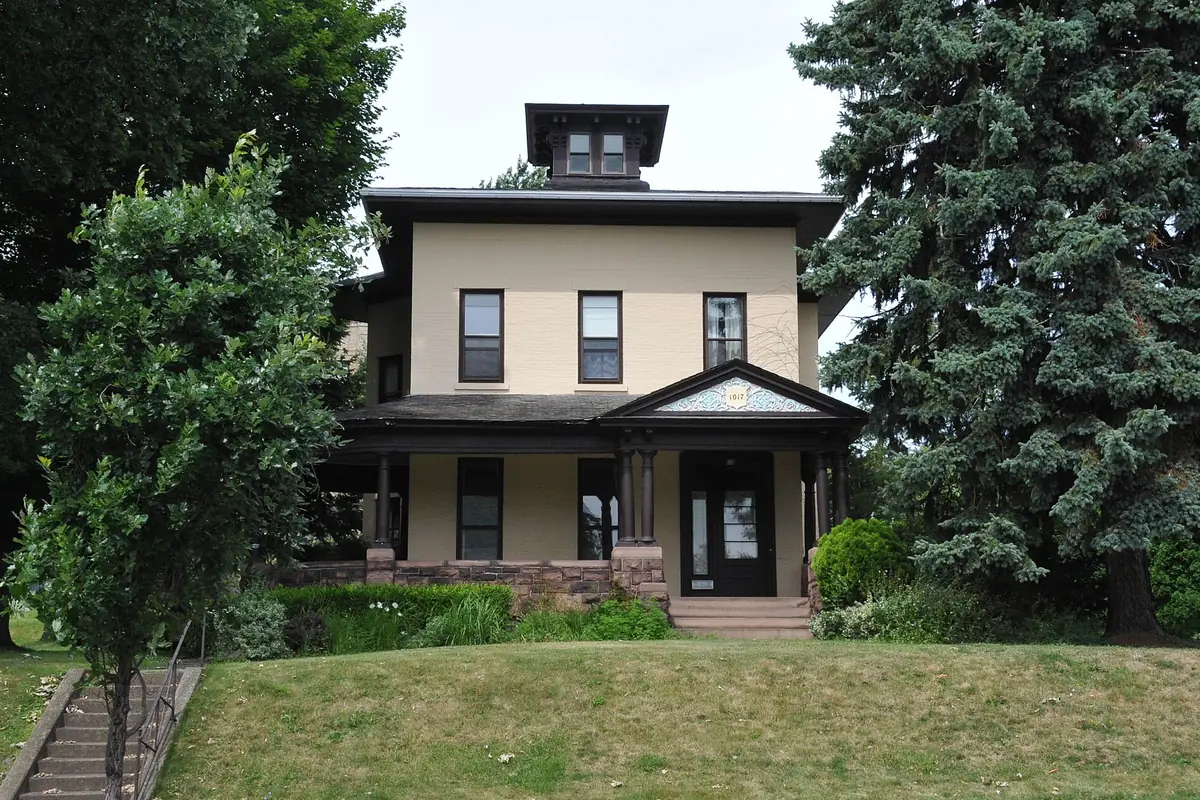
Stone and brick. Much of Rochester's housing stock predates 1940. Neighborhoods such as Maplewood, along the Genesee River gorge across from Seneca Park, and the Park Avenue and East Avenue areas have many stone or brick foundations. Water moves through their mortar joints. Expect to manage moisture, not eliminate it.
Concrete block. Common in homes built from the 1940s through the 1970s across the inner suburbs. Block is hollow, so water can fill the cores and seep out at the bottom course or through mortar joints. Frost and soil pressure can also cause horizontal cracking, which is a structural concern.
Poured concrete. Common in newer homes. Poured walls are dense but crack from shrinkage and settling. Leaks tend to come through those cracks, form-tie holes and the floor-wall joint.
What coatings can and cannot do
Waterproof paint and masonry sealers can reduce dampness on a wall that is only slightly porous. They cannot hold back water under pressure, and on a wall with active seepage they often blister and peel, sometimes with white mineral deposits pushing behind them. Our post on whether basement sealer paints work goes into detail. A coating is a finish, not a waterproofing system.
Permits and codes
New York's residential code, administered by the Division of Building Standards and Codes, sets damp-proofing and waterproofing requirements for new foundations. For repairs, permit needs vary: the City of Rochester and each town building department decide what needs a permit. Structural repairs, such as bracing a bowing wall, are more likely to need one.
Wall work in nearby towns
Older stone and brick foundations are common in village homes in Pittsford and Fairport, near the Erie Canal. Block foundations dominate much of Greece and Irondequoit. For damp walls that are mostly a surface problem, start with wet or leaking basements.
Wall waterproofing questions
What is the difference between damp-proofing and waterproofing?
Damp-proofing is a thin asphalt-based coating that slows moisture moving through soil into a wall. It is what many builders spray on new foundations. Waterproofing is a thicker, often rubberized or sheet membrane that can bridge small cracks and resist water under pressure. In wet Rochester soils, true waterproofing is usually the better choice.
Can a stone foundation be waterproofed?
A fieldstone or rubble wall can be kept much drier, but it rarely becomes perfectly dry. Contractors usually repoint failing mortar, then manage water with interior drainage and a sump, sometimes with a wall membrane that directs seepage down into the drain. Exterior work on stone walls is possible but complicated.
Do crack injections stop leaks in poured walls?
Often, yes. Polyurethane or epoxy injection fills a crack through the full wall thickness from the inside. Polyurethane flexes and suits leaking non-structural cracks; epoxy bonds the crack for strength. A crack that is wide, growing or offset needs a structural assessment before injection.
How do I know if my wall is block or poured?
Look at an unfinished section. Block walls show a grid of rectangular units with mortar joints. Poured walls are smooth or show form-tie marks in a regular pattern. Stone foundations show irregular stones and mortar. Most Rochester city homes built before 1940 have stone or brick; most suburban homes from the 1950s on have block or poured walls.