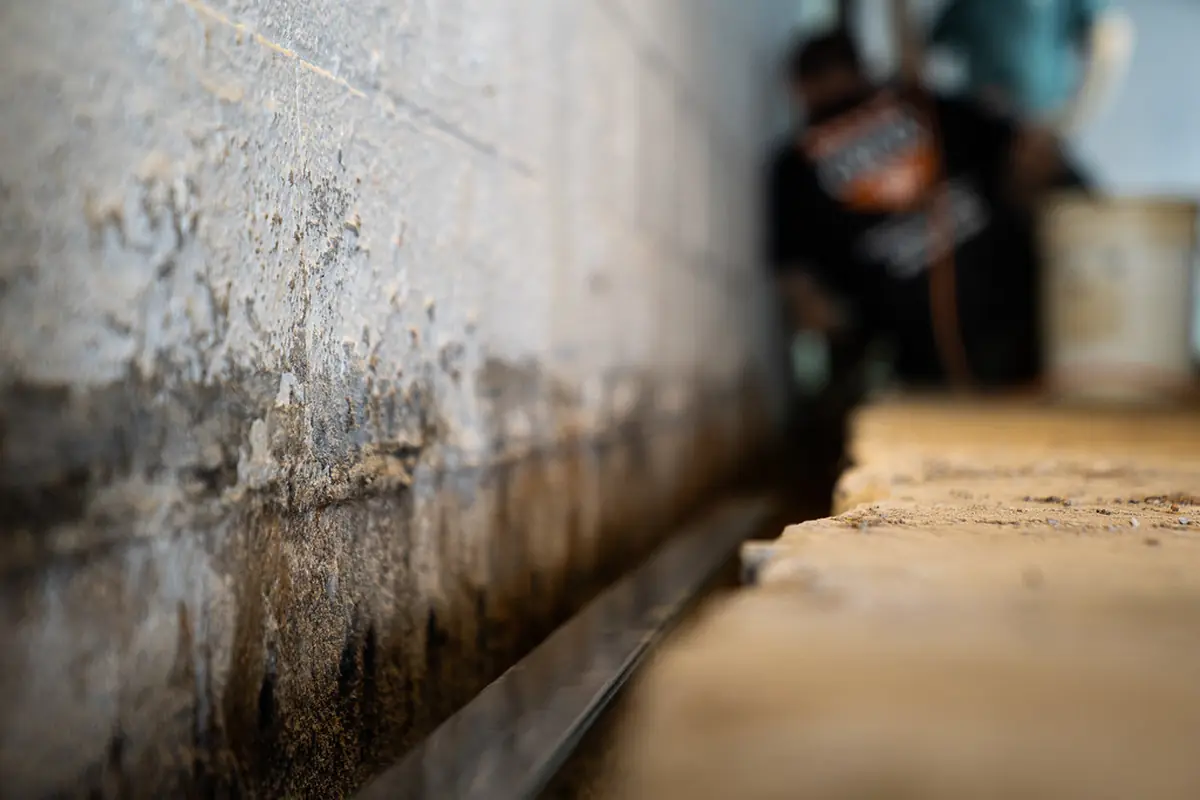
A wet or leaking basement in Rochester, NY has one of a handful of causes: surface water from roofs and grading, groundwater pushing through walls and the floor joint, a failed footing drain, a sump that cannot keep up, or water from inside the house. The right repair depends on which one you have. A good waterproofing contractor starts by tracing the water, not by quoting a system, and this page explains how that diagnosis usually goes.
Step one: when and where the water appears
The timing says a lot. Water that shows up within an hour of a downpour and only on one wall usually points to a gutter, downspout or grading problem on that side. Water that seeps in for days after a long rain, or every March when the snow melts, points to groundwater and drainage. Water that appears in dry weather points to plumbing or condensation.
Location matters too. A wet line along the bottom of every wall suggests the cove joint where floor meets wall. A damp vertical stripe suggests a crack. Wet patches at mid-height on a block wall suggest water sitting in the block cores. Drips from above may be a window well or a hose bib, not the foundation at all.
Why it happens so often in Rochester
Rochester's mix of older foundations and heavy soils makes basements prone to seepage. The Genesee River valley and the old shorelines of Lake Ontario left behind layered clay and silt in many neighborhoods. In winter, snow piles up along driveways and foundations; NOAA normals put the city's average at roughly 102 inches a season. When the snowpack melts, the Ready.gov flooding guidance on spring flooding applies to basements as much as streets.
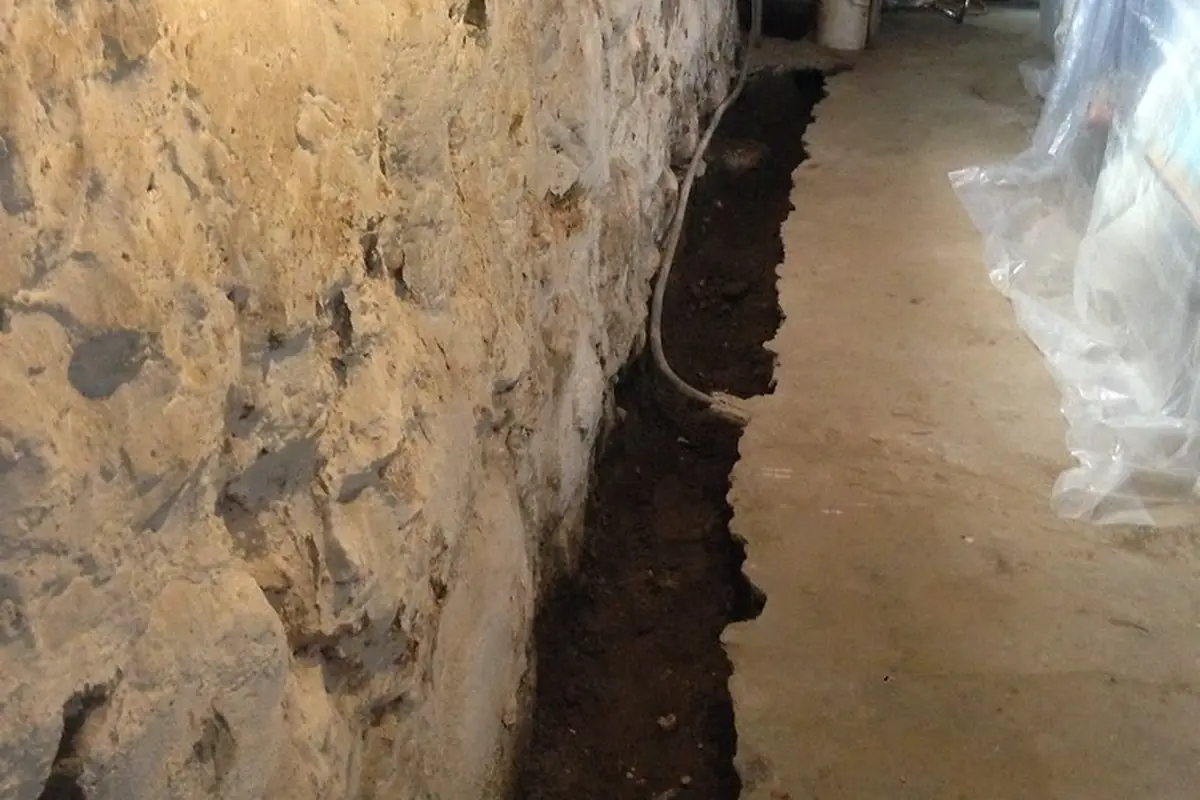
Older housing adds to it. Homes near the Erie Canal's historic route through downtown and the Corn Hill neighborhood, or in Maplewood near the river, often have stone or brick foundations with lime mortar that water slowly washes out. Those walls are rarely fully dry and need realistic expectations.
Matching the fix to the leak
- Roof and surface water: extend downspouts, clean gutters, regrade soil to slope away. See downspouts and yard drainage.
- Crack seepage in poured walls: crack injection from inside, or exterior repair if the wall is excavated.
- Block walls holding water: interior drainage with weep holes drilled into the cores, or exterior membrane.
- Floor-wall joint seepage: interior perimeter drain tile to a sump pit.
- Failed footing drains: exterior drain tile replacement, often with a new membrane.
- Overwhelmed sump: a larger pit, a stronger pump or a backup unit; see sump pumps.
- Condensation: dehumidification, insulating cold pipes, and sealing air leaks.
Interior versus exterior repair
Exterior waterproofing stops water at the outside of the wall, keeps the wall itself drier and suits homes with room to dig. It costs more and disturbs landscaping. Interior drainage accepts that some water reaches the wall, then collects it under the floor edge and pumps it out. It is less disruptive and often less expensive, but the wall stays damp and you depend on a pump. A contractor should explain why one fits your house better.
Mold and finished basements
Repeated dampness feeds mold, especially behind drywall and carpet in finished basements. The EPA's mold and moisture guidance is a good starting point. Fix the water first; remediation without fixing the source does not last.
Wet basement calls across the area
Seepage calls come from everywhere, but we expect a lot from Penfield, where Irondequoit Creek runs through the town, and from Webster, where lakeshore winds pile snow against foundations. Check your town's page for local details, or read about musty basements with no puddles if your problem is more smell than water.
Wet basement questions
Why is my basement wet when it has not rained?
Dry-weather water usually comes from inside the house or from condensation. Check for plumbing leaks, a dripping water heater, a washing machine hose, or summer humidity condensing on cool walls and pipes. Seal a piece of plastic sheeting to the wall and leave it a day or two; moisture under the plastic means it is coming through the wall, moisture on top means condensation.
Is a little water in the basement after heavy rain normal?
It is common, but it is not something to ignore. Even small amounts of repeated seepage feed mold, rot wood framing, ruin stored belongings and can wear down a wall over time. A small leak is also the cheapest one to fix, often with downspout and grading changes rather than a full system.
What is a cove joint leak?
The cove joint is the seam where the basement floor slab meets the foundation wall. They are poured separately, so the joint is a natural weak point. When groundwater pressure builds under and beside the slab, water pushes up through that seam. Interior perimeter drainage is the typical fix.
Can I fix a leaking basement myself?
Some causes are DIY-friendly, such as extending downspouts, cleaning gutters, regrading a flower bed or running a dehumidifier. Others, like cutting the floor for interior drain tile, excavating to the footing, or repairing structural cracks, belong with a contractor. Start with the simple outside fixes and watch what changes.