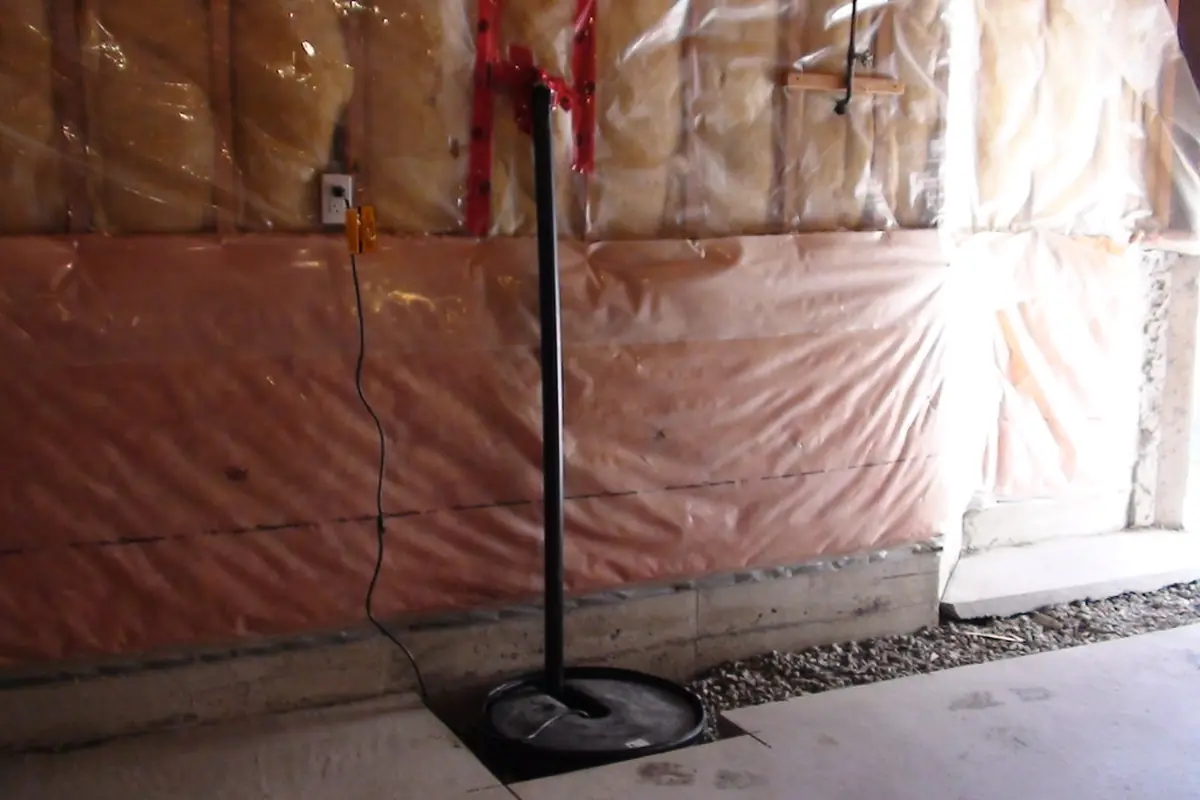
A sump pump that runs constantly usually has one of four causes: the ground really is saturated and water keeps arriving, the float switch is stuck or set too low, the check valve has failed so the same water keeps falling back into the pit, or the pit is too small for the pump. Some causes are normal; others will burn out the pump. Here is how to sort them out.
Cause 1: the ground is full of water
After a long rain, a fast thaw or a wet spring, groundwater can arrive in the pit faster than the pump clears it. Lots near Lake Ontario, Irondequoit Bay or creeks such as Irondequoit Creek can have a high water table for weeks. If the pump is moving water out every cycle, and the outdoor outlet is flowing, the pump may simply be doing its job. Watch whether the cycling slows as the weather dries out.
Cause 2: the float switch
Tethered floats can catch on the pit wall, the pump body or the power cord. Vertical floats can stick in their track. A switch that sticks "on" runs the pump dry, which overheats it. A switch set too close together, turning on and off with only an inch of water, causes rapid short-cycling. Unplug the pump before touching anything, then look for obstructions.
Cause 3: a failed check valve
The check valve sits on the discharge pipe above the pump. When it fails, the water in the pipe falls back into the pit after each cycle, raising the level enough to trigger the pump again. You will often hear a gurgle or a thud as the pump shuts off. A contractor can replace the valve, often in under an hour.
Cause 4: the pit is too small
A small pit fills quickly, so the pump turns on and off constantly. Many older installations used narrow buckets. Replacing the basin with a larger sealed one gives the pump longer, gentler cycles. See sump pumps for how pits are sized.
Cause 5: the water is coming back
If the discharge outlet is too close to the house, or the yard slopes back toward the foundation, the water you pumped out soaks back into the soil and returns to the pit. Extending the discharge line well away from the house, ideally downhill, breaks the loop. See downspouts and yard drainage.
Cause 6: a winter blockage
In cold weather, a frozen discharge line can make the pump run without moving water. The National Weather Service in Buffalo issues hard-freeze and lake-effect warnings for Monroe County every winter; those are the days to check your outlet.
When to call
Call a contractor if the pump runs with no water moving, cycles continuously in dry weather, makes grinding or rattling noises, trips its breaker, or if the pit is near overflowing. If water is already on the floor, see our emergency basement water page.
Related reading
Common questions
Is it bad if my sump pump runs every few minutes after rain?
Not necessarily. After heavy rain or snowmelt, frequent cycling can just mean the ground is saturated and the pump is working. It becomes a concern if the cycling continues for days in dry weather, the pump runs without moving water, or it runs continuously without shutting off.
How do I test a check valve?
Watch the pit right after the pump shuts off. If water rushes back down the discharge pipe into the pit and the water level jumps, the check valve is likely failing. A contractor can replace it quickly.
Can a sump pump burn out from running too much?
Yes. Constant running and rapid short-cycling both wear out motors and switches faster. If your pump cycles constantly, the fix may be a larger pit, a properly set switch, or a working check valve, not just a new pump.